MOTS-c Peptide
MOTS-c is a mitochondrial-derived peptide studied for metabolic and exercise-capacity research.
MOTS-c vs 5-Amino-1MQ: a peptide and a small molecule compared on animal research, FDA status, format and the Real Peptides prices for each one.

MOTS-c is a mitochondrial-derived peptide studied for metabolic and exercise-capacity research.
MOTS-c is a mitochondrial-derived peptide studied for exercise capacity, insulin sensitivity and metabolic aging.
| Product | Form | Strength | Testing | Class | Price |
|---|---|---|---|---|---|
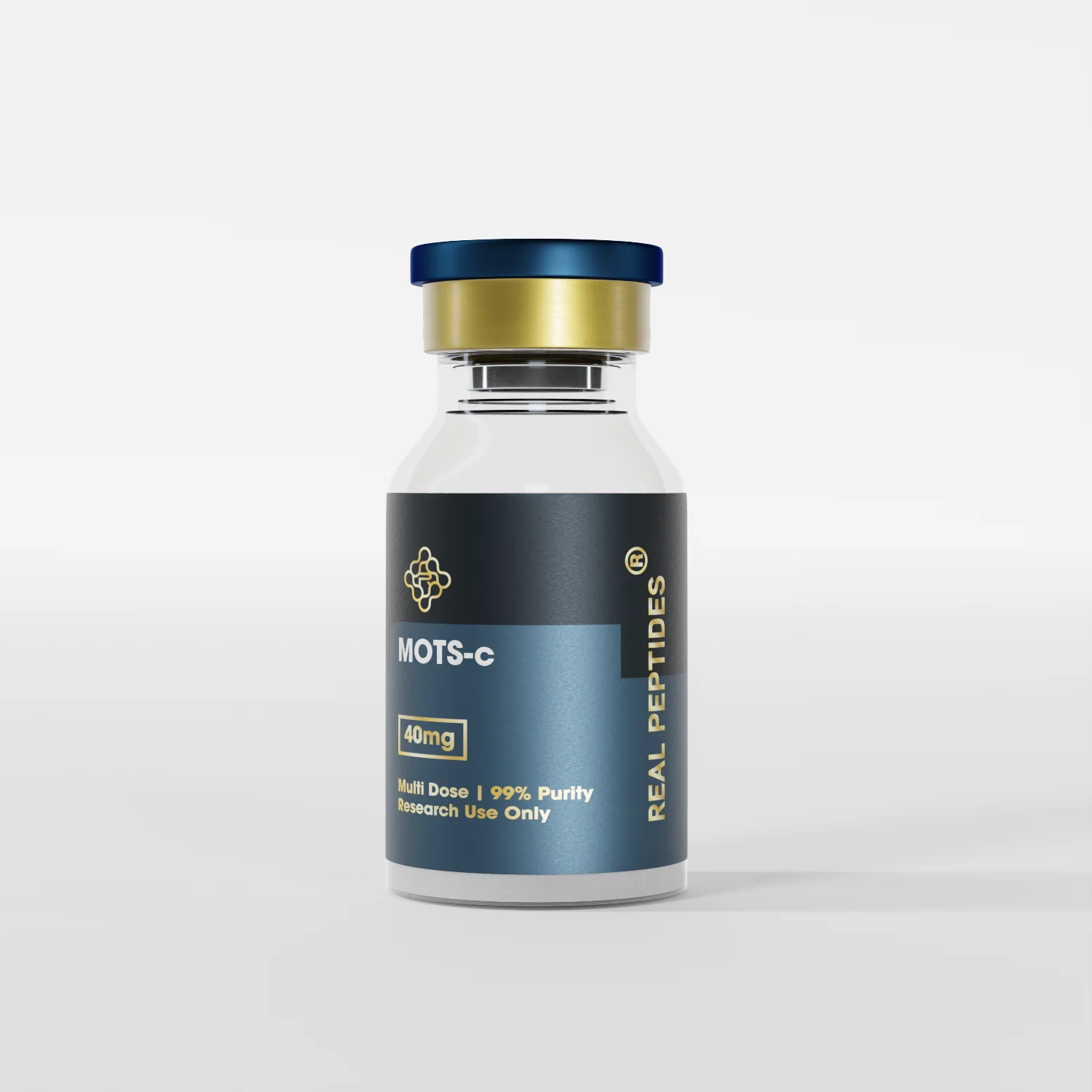
| Real Peptides MOTS-c Peptide | Lyophilized powder | 10mg | Third-party COA | — | $43.20 |
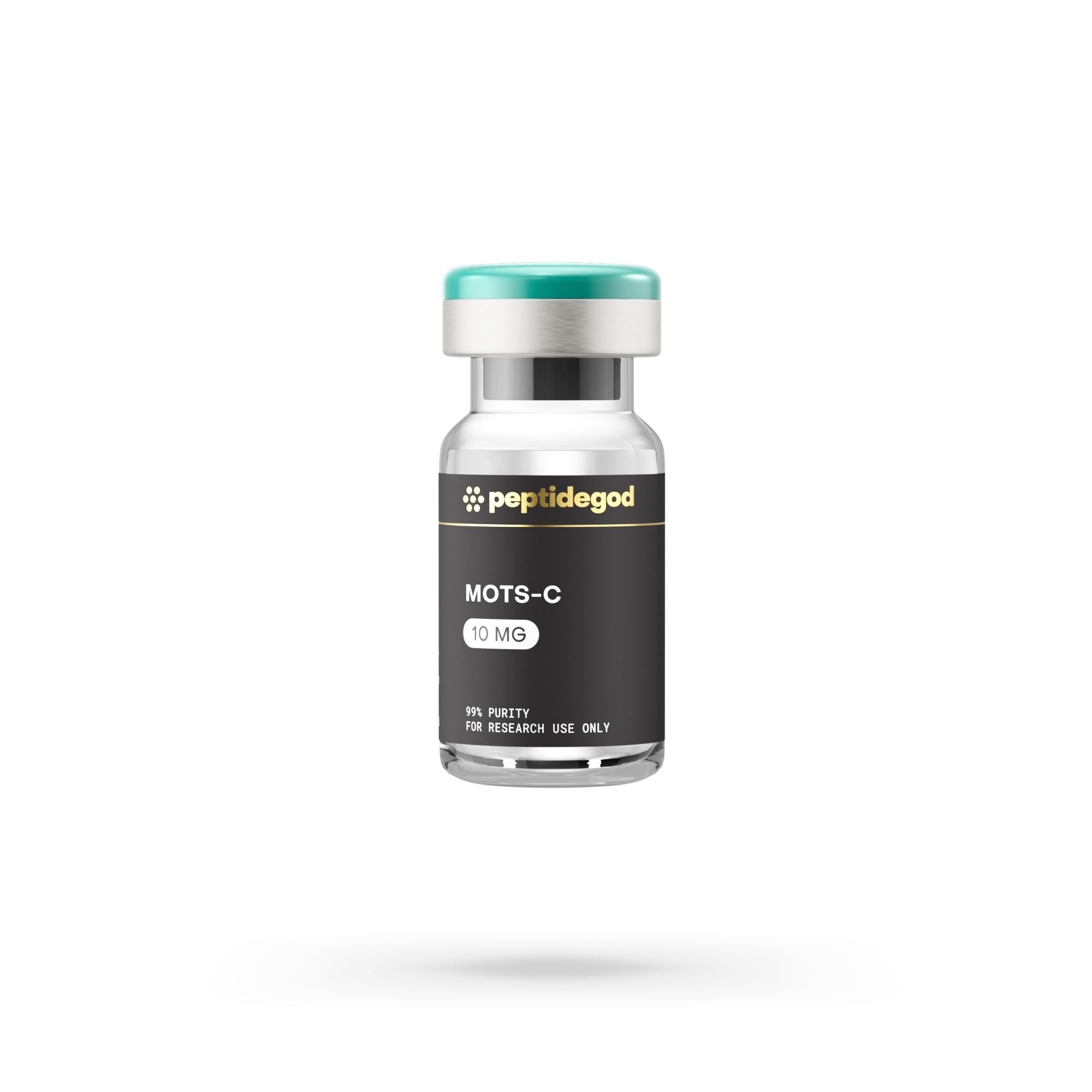
| Peptide God MOTS-c | Lyophilized powder | — | — | Mitochondrial peptide | $49.95 |
Real Peptides markets MOTS-c for $43.20 for a 10mg vial and 5-Amino-1MQ at $33.60 in capsules. Customers frequently equate MOTS-c with 5-Amino-1MQ as two versions of the same compound, yet they are dissimilar types of molecules with dissimilar research histories and regulatory statuses.
In this article, we compare the two regarding what substances they actually are, their animal data, their FDA status, and the cost. Neither has been approved by the FDA and both are sold for research purposes.
The core difference is that MOTS-c is a peptide and 5-Amino-1MQ is a small molecule. MOTS-c is a mitochondria-derived peptide, encoded in mitochondrial DNA and studied as a metabolic signal. 5-Amino-1MQ is not technically a peptide at all, even though vendors list it as "5-Amino-1MQ Peptide."
The two also work at different points. 5-Amino-1MQ inhibits a specific enzyme, NNMT (nicotinamide N-methyltransferase). MOTS-c is studied as a signal coming from the mitochondria themselves. Our what is MOTS-c page explains that origin.
Both compounds focus on research in metabolism, although they have no trials in humans and that is where things start to diverge.
| Point | MOTS-c | 5-Amino-1MQ |
|---|---|---|
| Type | Mitochondria-derived peptide | Small molecule, NNMT inhibitor |
| Main research area | Metabolism and exercise | Fat mass and body weight in obese mice |
| Controlled human trials | None published | None published |
| Long-term human safety | Unknown | Unknown |
| Form sold | Lyophilized powder | Capsules |
| July 2026 FDA panel | Recommended for 503A list, 8-6, 1 abstention | Not voted on |
| Vendors on this site | Real Peptides, Peptide God | Real Peptides |
5-Amino-1MQ is less general in animal research than the research on MOTS-c. In a study of diet-induced obesity in mice, 5-Amino-1MQ was found to be effective in terms of either lowering body weight or fat mass.
Research on MOTS-c is more elaborate as it is used in studies on metabolism and exercise of some creatures but vendors sometimes refer to it as something like "exercise-mimetic research." However, elaboration does not imply superiority here: the more elaborate, the more questions are posed without being answered. In the comparison between MOTS-c and 5-Amino-1MQ, neither has human proofs that would make it superior to the other.
For both, the same limit applies. Mouse results do not show what happens in people, and the amounts used in animals cannot be turned into a human figure, as our dosage page explains. We covered the weight angle separately in MOTS-c and weight loss.
MOTS-c has a formal FDA milestone and 5-Amino-1MQ does not. On 23 July 2026, the Pharmacy Compounding Advisory Committee voted 8-6, with one abstention, to recommend MOTS-c for the 503A bulks list. The vote is non-binding, and FDA must still go through proposed and final rulemaking before compounding is allowed.
5-Amino-1MQ was not part of those votes. It was also not among the products named in FDA's 24 August 2026 warning letters to five online peptide vendors. That is not an endorsement. It only means neither compound was singled out in that action.
In terms of pricing, a 5-Amino-1MQ pack is $9.60 cheaper than a Real Peptides MOTS-c vial, but the products cannot be compared per mg based on our data. The MOTS-c vial has a 10mg dosage that would tell us about $4.32 price per mg. The 5-Amino-1MQ product is shown as a capsule with no strength or number in our data.
The selection is determined by the research issue, rather than which compound sounds more powerful. A project related to NNMT and fat mass models in mice recommends - 5-amino-1MQ. A project that pertains to mitochondrial signaling, metabolism or training models recommends MOTS-c.
Certain purchasers buy both in order to conduct simultaneous studies on two metabolic pathways. This is a valid research design, but it does not make MOTS-c versus 5-Amino-1MQ a competition and generate a winner, as there are no human data available to assess the two.
For a personal health goal, neither is the answer. Both are unapproved research compounds with no human trial data, and the conversation belongs with your doctor. To see how both fit alongside NAD+, read our longevity peptides comparison.
Real Peptides markets MOTS-c for $43.20 for a 10mg vial and 5-Amino-1MQ at $33.60 in capsules. Customers frequently equate MOTS-c with 5-Amino-1MQ as two versions of the same compound, yet they are dissimilar types of molecules with dissimilar research histories and regulatory statuses.
In this article, we compare the two regarding what substances they actually are, their animal data, their FDA status, and the cost. Neither has been approved by the FDA and both are sold for research purposes.
The core difference is that MOTS-c is a peptide and 5-Amino-1MQ is a small molecule. MOTS-c is a mitochondria-derived peptide, encoded in mitochondrial DNA and studied as a metabolic signal. 5-Amino-1MQ is not technically a peptide at all, even though vendors list it as "5-Amino-1MQ Peptide."
The two also work at different points. 5-Amino-1MQ inhibits a specific enzyme, NNMT (nicotinamide N-methyltransferase). MOTS-c is studied as a signal coming from the mitochondria themselves. Our what is MOTS-c page explains that origin.
Both compounds focus on research in metabolism, although they have no trials in humans and that is where things start to diverge.
| Point | MOTS-c | 5-Amino-1MQ |
|---|---|---|
| Type | Mitochondria-derived peptide | Small molecule, NNMT inhibitor |
| Main research area | Metabolism and exercise | Fat mass and body weight in obese mice |
| Controlled human trials | None published | None published |
| Long-term human safety | Unknown | Unknown |
| Form sold | Lyophilized powder | Capsules |
| July 2026 FDA panel | Recommended for 503A list, 8-6, 1 abstention | Not voted on |
| Vendors on this site | Real Peptides, Peptide God | Real Peptides |
5-Amino-1MQ is less general in animal research than the research on MOTS-c. In a study of diet-induced obesity in mice, 5-Amino-1MQ was found to be effective in terms of either lowering body weight or fat mass.
Research on MOTS-c is more elaborate as it is used in studies on metabolism and exercise of some creatures but vendors sometimes refer to it as something like "exercise-mimetic research." However, elaboration does not imply superiority here: the more elaborate, the more questions are posed without being answered. In the comparison between MOTS-c and 5-Amino-1MQ, neither has human proofs that would make it superior to the other.
For both, the same limit applies. Mouse results do not show what happens in people, and the amounts used in animals cannot be turned into a human figure, as our dosage page explains. We covered the weight angle separately in MOTS-c and weight loss.
MOTS-c has a formal FDA milestone and 5-Amino-1MQ does not. On 23 July 2026, the Pharmacy Compounding Advisory Committee voted 8-6, with one abstention, to recommend MOTS-c for the 503A bulks list. The vote is non-binding, and FDA must still go through proposed and final rulemaking before compounding is allowed.
5-Amino-1MQ was not part of those votes. It was also not among the products named in FDA's 24 August 2026 warning letters to five online peptide vendors. That is not an endorsement. It only means neither compound was singled out in that action.